
Adventures in the Youniverse: On the Nature of Identity
I chose my profession because I get bored easily. I asked myself, what is the most complicated thing? The thing I couldn’t possibly fully understand? And the human mind or the universe were my top two contenders. I don’t math so the decision was easy.
Last night someone asked me to define identity and I was brought back to that decision. We’re so complex, so multifaceted, so intricate– I get lost in the universe of every person I meet. And in the end I think identity is so vast and magnificent that it evades definition; like the universe; we only ken one small part.
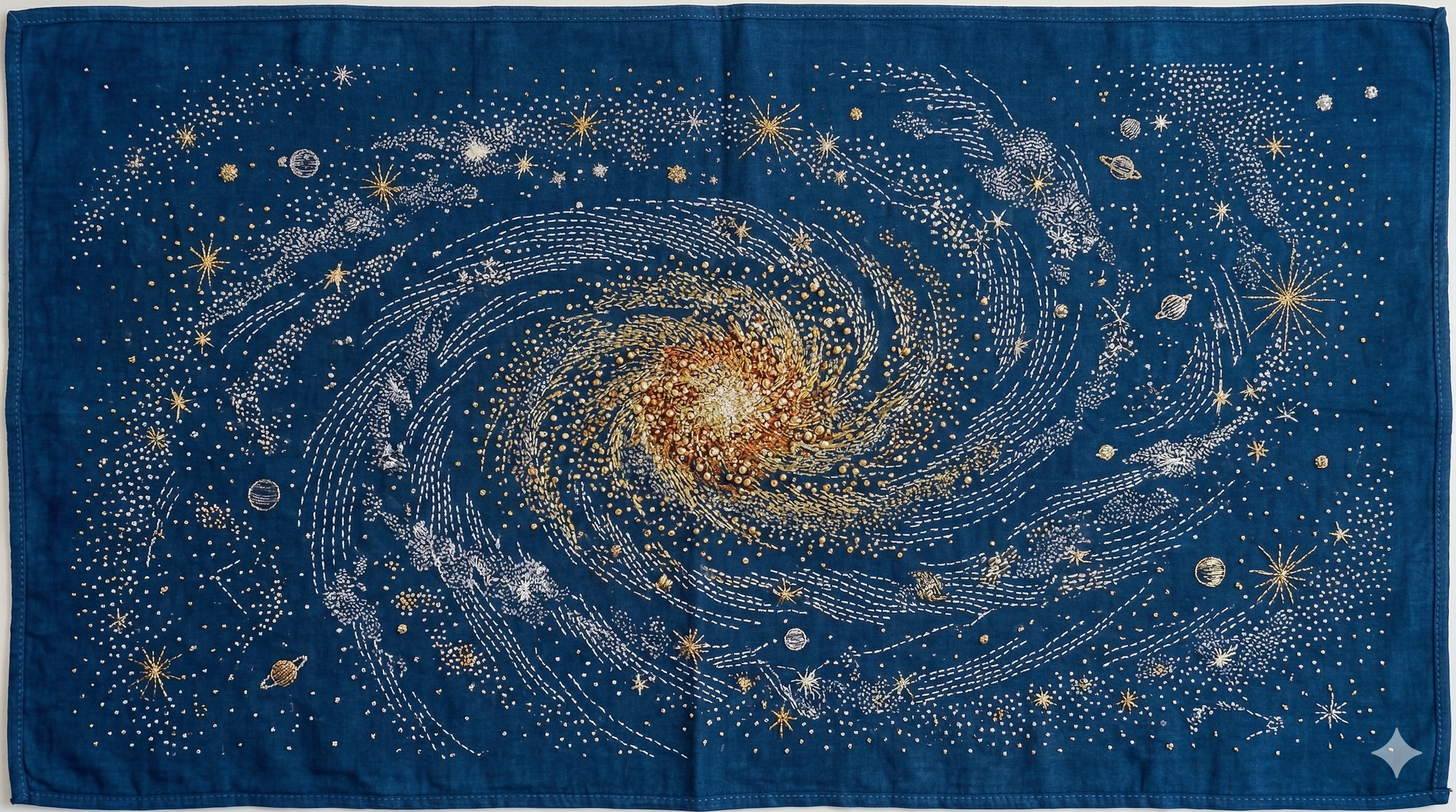
But we don’t need to understand the whole universe to move within it. We chart what we can. We work with the parts that are available to us.
Identity might be vast, but it doesn’t express itself all at once. It shows up in patterns. In the way we move through the world. In how we think, feel, relate, and act.
And those patterns, while complex, are not random.
One way of making sense of those patterns is to look at how different domains of the self organize. Physical, emotional, intellectual, relational, purposeful, existential.
Each of these is complex in its own right. But more importantly, they don’t operate in isolation. They interact. They influence each other. They compensate for each other.
And over time, the way they organize begins to take on a shape.
And that shape is what we tend to call identity. Not a fixed essence. Not something hidden waiting to be discovered. But something that is continually being formed through the organization of your system.
Change the organization, and your identity shifts.
But systems don’t organize themselves evenly.
Some parts develop early. Some are reinforced. Some are neglected. Some adapt in ways that make sense in one environment and become expensive in another.
Over time, your system learns to rely on what works. And what works isn’t always what works well.
You can be a person who’s highly developed intellectually, but unable to manage your emotions. Or someone deeply relational, but without a stable sense of self.
From the outside, these can look like personality traits. Strengths, even. But underneath, they are patterns of uneven development. Patterns that leave an aftertaste that’s just slightly off.
That offness is often what we experience as suffering.
Not because something’s broken. But because your system is carrying more weight in some places than they were built to support.
So the work is not to “fix” identity. It’s to look at how your system is organized. What’s been developed. What’s been neglected. What’s been compensating for what?
And what would need to shift for your system to be more inhabitable?
That’s the level we can actually work at. Not the whole universe; the patterns that shape how it’s lived.
That’s the level I’m exploring– one tiny solar system of the vast youniverses I meet.
So when Kevin comes to me because he can’t sustain interest in one woman– now that he’s met so many through online dating, always suspecting there’s someone more right, more compelling, more perfect. We begin in the relational domain. We look at what happens when too many options erode the ability to choose. When commitment starts to feel less like discovery and more like risk.
And we run into something deeper.
The fear that once he attaches, she will see what he sees. That he is not enough.
But how do we fix that feeling of not enoughness? At this point, we’re no longer just in the relational domain.
We turn toward his relationship with his own emotional experience; his difficulty tolerating stillness, his need for constant stimulation, the way he’s come to rely on intensity to feel secure.
So the work shifts. Not toward finding the right woman. Toward expanding his ability to stay; with himself, with another person, with the quieter moments that don’t immediately reward.
Over time, his baseline begins to change. And as he regains his ability to live in the analog world with himself, in real time, he finds that exploring one woman more deeply is a better pace than always keeping his options open.
He doesn’t find his forever love right away, but he finds that by dating one person at a time he’s better able to sustain interest and appreciate her deeper beauty and worth.
And she’s better able to see him too.
But back to the question of identity. Let’s see if I can put into words the vision I see when I close my eyes.
We have the six domains of self– physical, emotional, intellectual, relational, purposeful, and existential– and it’s like they’re having a party inside your head. They’re having a rousing conversation and some of them dominate, some of them speak less but perhaps more thoughtfully, and some of them observe quietly as they sip their wine. Together they all generate the energy of the room, the atmosphere you run into when you walk in after the party’s been under way for a while.
To me that atmosphere is what identity is. A universe created by the interaction of other universes. An emergent property of those interactions. And I, like that Tesla, wandering through space, am the quiet one sipping wine– observing the mystery of how it all coheres.